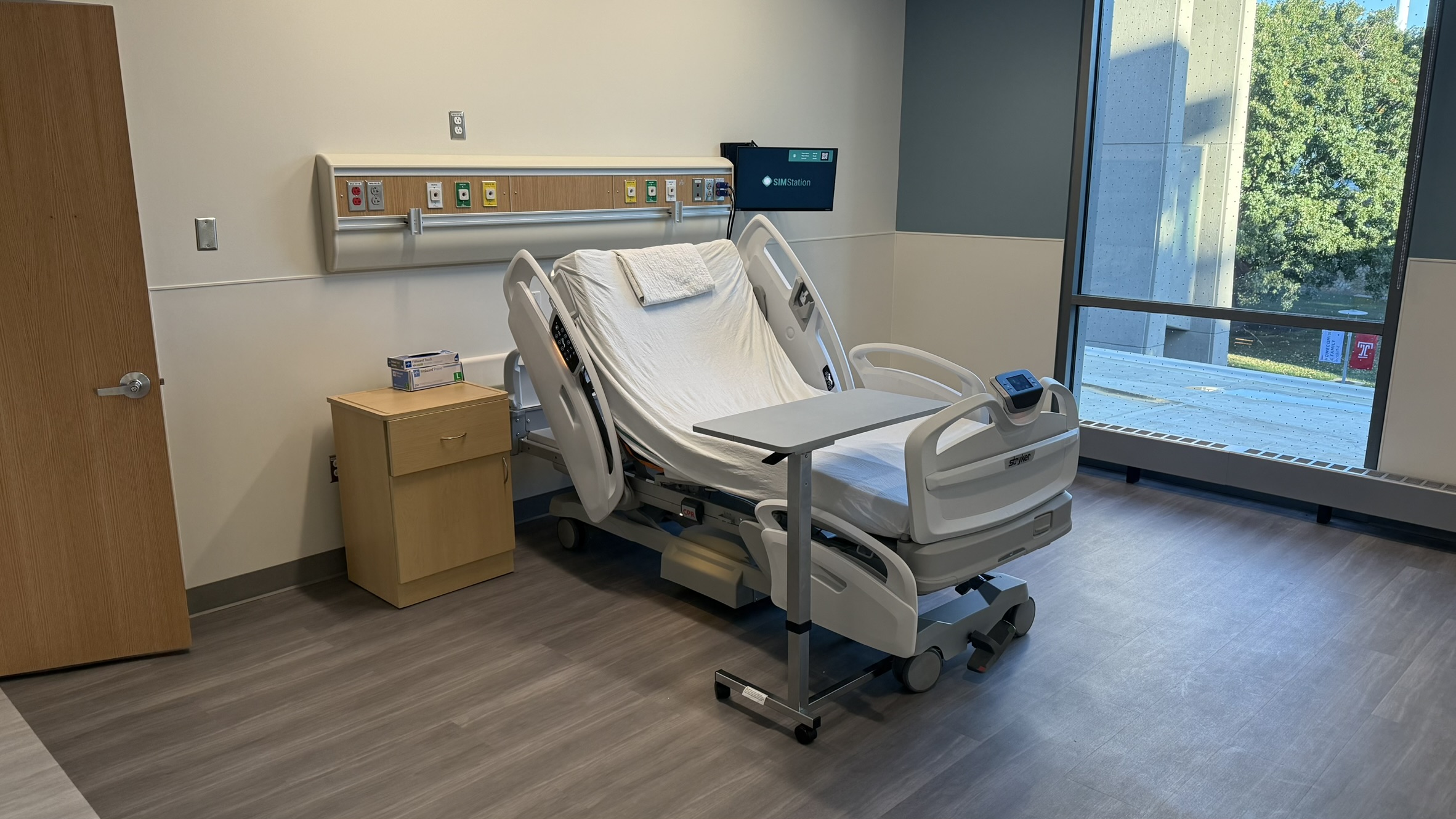
Inpatient Rooms
UsingIn simulation,the inpatient rooms, students are fully immersed in realrealistic worldhospital situations in a controlled environment,environments, allowing them to practice clinical skills in a safe, controlled setting. These rooms are equipped to replicate real-world inpatient care, including vital sign monitoring, patient mobility, medication administration, and complex clinical scenarios. Using simulation, students can refine their abilities, respond to critical situations, and build confidence before encountering real patients, ensuring they mayare notbetter seeprepared in theirfor clinical practice. It also allows students to practice these skills before going into an actual clinical setting, so they feel more comfortable executing these skills when it comes time to do so on a real person.
The Sim Lab enhancesgoes studentbeyond learningindividual askill stepdevelopment further,by in that it allows students to engage inpromoting interprofessional simulationcollaboration. with other clinical professions where studentsStudents from Nursing, Occupational Therapy, Physical Therapy, Communication Sciences and Disorders, and other healthcare programs can interactwork alltogether in onethe area.same inpatient space. This collaborative approach helps learners understand each profession’s role, improve communication, and practice team-based patient care, mirroring the dynamics of a real hospital setting. By combining realistic inpatient scenarios with interprofessional engagement, the Sim Lab provides a comprehensive learning experience that bridges the gap between classroom knowledge and clinical application.